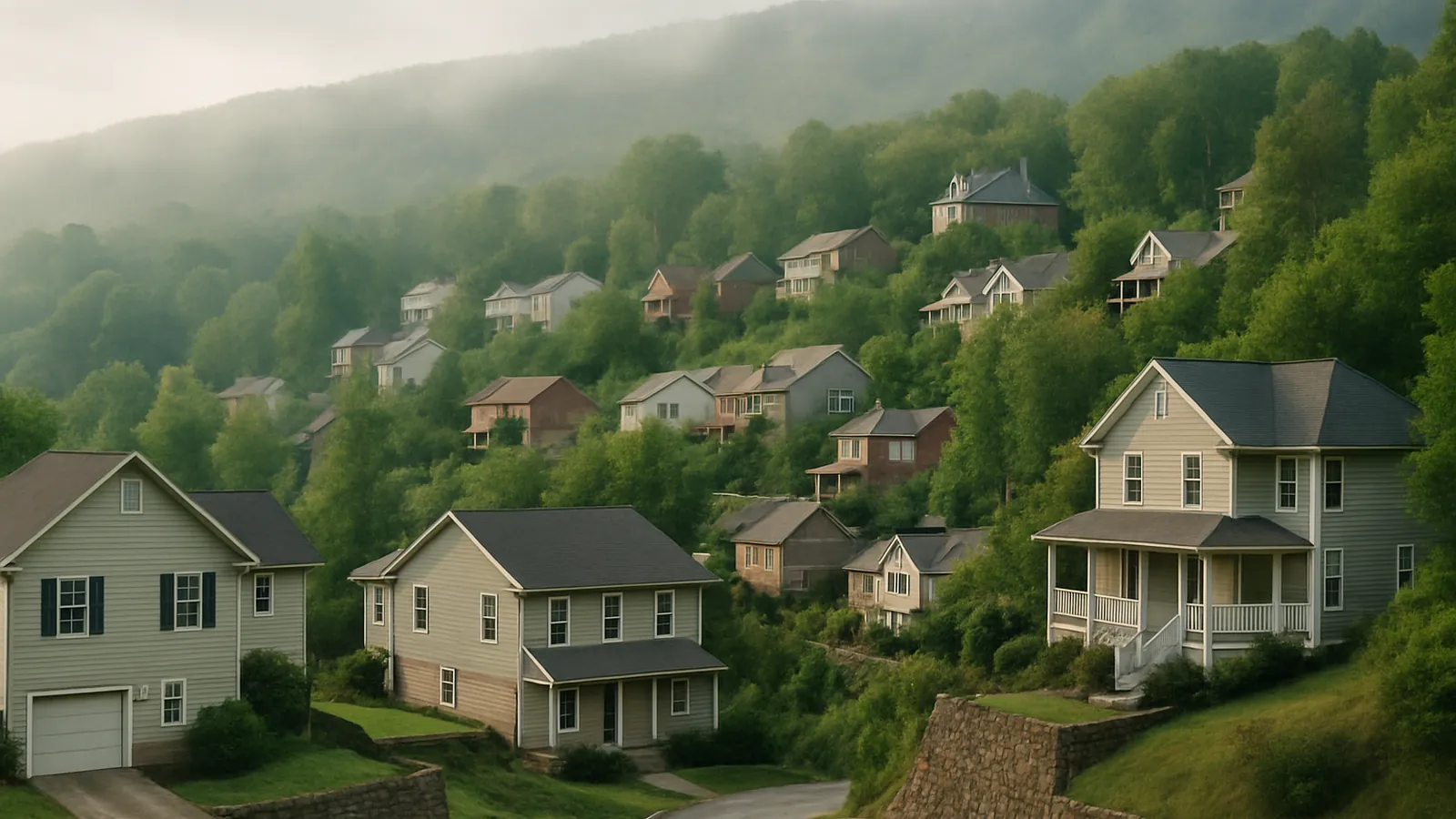
Foundation piering in Chattanooga runs $1,200–$3,000 per pier, with most settlement repairs needing three to eight piers — $4,000–$15,000 for the job. Piers are driven to refusal on limestone or stable bearing, and in Ridge-and-Valley terrain that depth varies sharply across a single lot.
Here's what settlement means on this ground, and how a pier ends it.
Residual soil over rock, and why depth varies so much
Ridge-and-Valley ground is residual soil — clay weathered in place from the limestone and shale beneath it — and that process doesn't produce an even blanket. Rock weathers irregularly, so the soil column above it can be shallow in one part of a lot and considerably deeper a few feet away. A house spanning that variation is sitting on two different bearing conditions, and differential settlement follows without anything unusual happening.
Add the local water volume and the picture completes itself. Roughly 54 inches of annual rain on sloping ground moves soil, and concentrated runoff can wash fines out from beneath a footing over years. That's why a Chattanooga settlement diagnosis is incomplete until someone has walked uphill of the house.
How a pier ends the argument
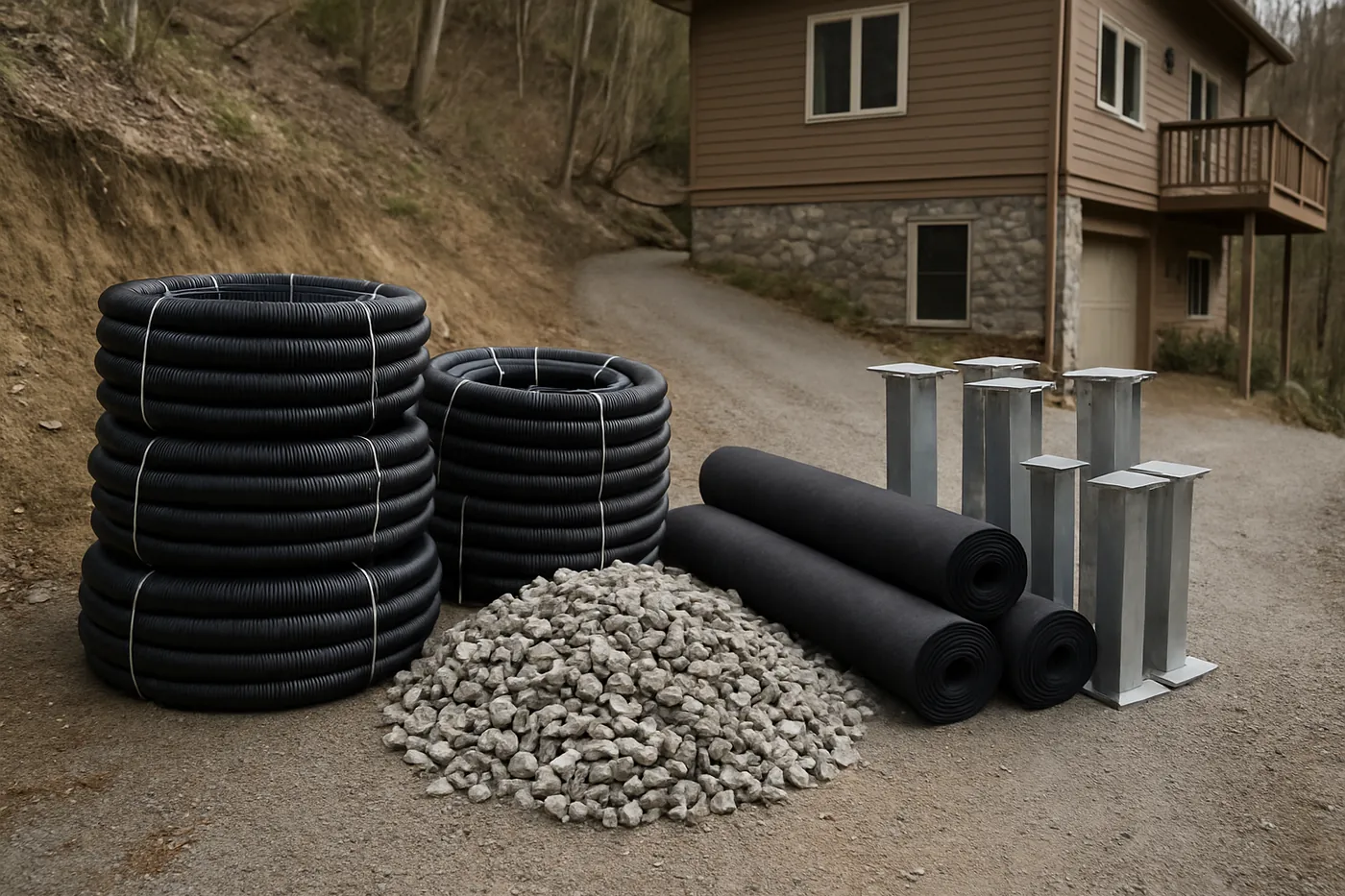
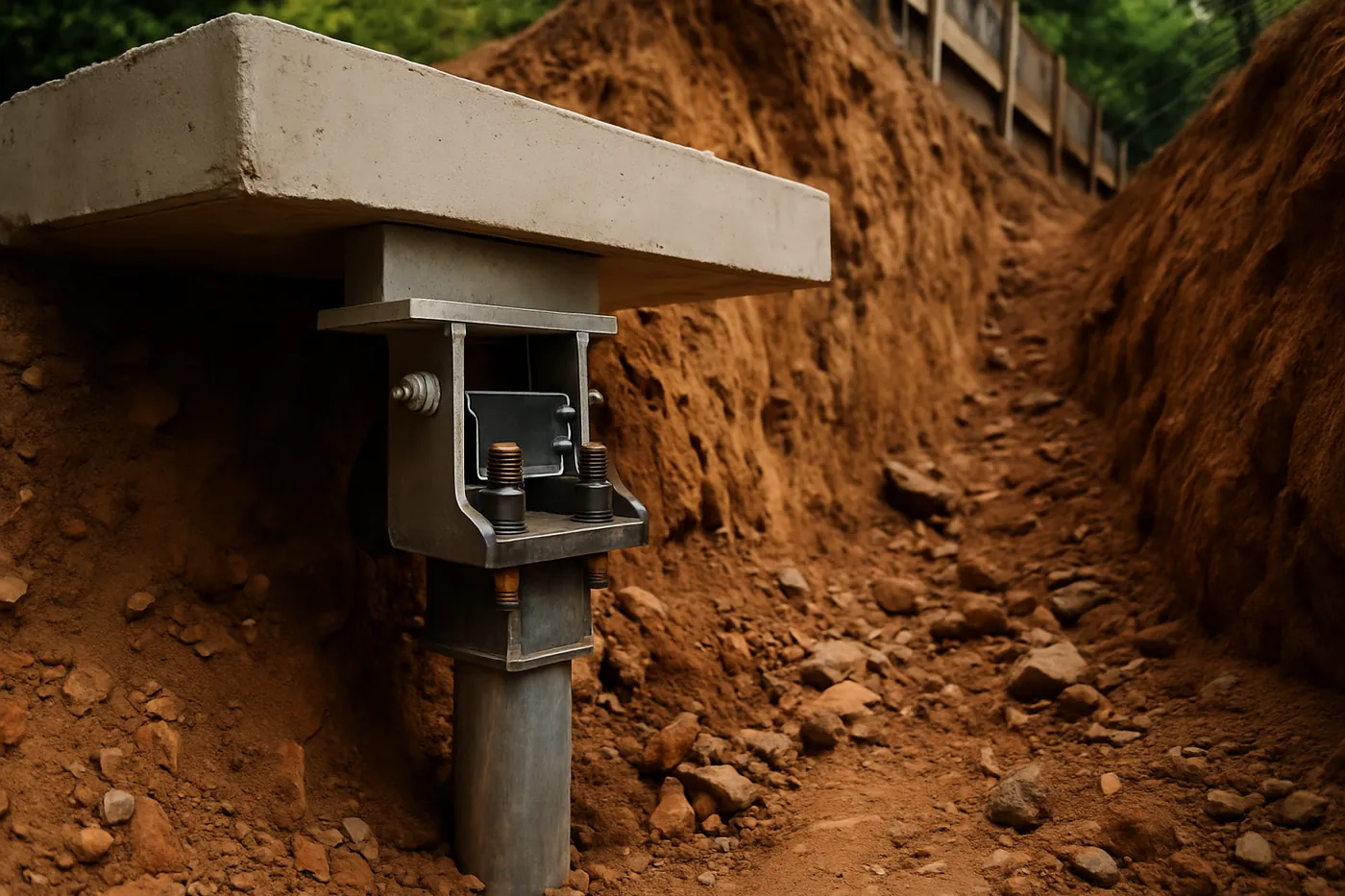
A steel pier is a column driven hydraulically beneath the footing, section by section, until it refuses to advance — meaning it reached material that carries load without further movement. A bracket bolted to the footing transfers the house's weight onto that column.
In this terrain refusal can come quickly, on competent limestone a modest distance down, or considerably deeper where weathering ran further. Both are normal. What isn't normal is a crew driving every pier to the same specified depth — on ground this variable, that's a number from an office rather than a measurement from the lot. Each pier gets its own depth and its refusal pressure recorded, which is also how you distinguish real rock from a boulder.
What sets the pier count and the price
- The affected run — defined by laser floor elevations, not by square footage
- Depth to refusal — highly variable here, and sections are priced individually
- Foundation type — crawl footings, walkout basement walls, and chimney or porch footings each carry different bracket work
- Access — steep lots, retaining walls, and tight hillside side yards add real labor hours
- The drainage correction — nearly always priced alongside, and usually the cheaper half
Timeline and lift
Most piering runs two days to a week depending on count and access, and the house stays livable throughout. Where lift is attempted it's synchronized across piers and monitored against interior crack widths. You receive the pier log, stage photographs, and warranty paperwork at completion.
Which pier belongs under this house?
Piering in the Ridge-and-Valley means dealing with what limestone does over time: residual clay above, rock below, and documented karst in between that can put a cavity where the bearing stratum should be.
| Option | What it does | What the ground here decides |
|---|---|---|
| Pushed steel | Pressed to refusal against the house's own weight | Refusal can arrive fast over shallow rock — confirm it is rock, not a ledge over a void |
| Screwed steel | Advanced until a measured torque is reached | The measured choice for hillside homes too light to drive against |
| Cast concrete | Placed and cured against firm strata | Used where karst is suspected, so the pier bears on proven material rather than a roof |
Around here the depth reading is not the whole answer. Two piers can refuse at the same depth with different things beneath them, and the valley's springs mark where to be suspicious.
Piering questions, straight answers
How many piers does a Chattanooga house usually need?
Most settlement repairs use three to eight piers, placed where the floor-elevation survey shows the footing actually dropped rather than spaced evenly around the perimeter. On hillside lots the count often clusters on the downhill side, where the soil column over bedrock runs deeper and washing is more likely.
How deep do piers go here?
Until they refuse — and in this terrain that can be shallow or deep on the same lot. Ridge-and-Valley ground is residual soil over limestone and shale, and the depth to rock varies sharply across short distances. Piers are driven hydraulically to refusal with the pressure logged individually, because assuming a depth here is guessing.
Is hitting rock quickly a good thing?
Usually yes — it means fewer pier sections and a lower price, since sections are priced individually. What matters is confirming it's competent rock rather than a boulder or a hard clay lens a pier could eventually punch through. Refusal pressure logging is how that gets documented rather than assumed.
Will piering lift my house back to level?
Often partially, sometimes fully — stabilization is the promise and recovery is the bonus. Lift is attempted where the structure safely allows and monitored against interior crack widths in real time. On a house that has moved over decades, some of it is permanent, and you'll hear that before work starts.
Do you fix the water at the same time?
Nearly always, and usually first. On a hillside lot, settlement frequently traces back to runoff washing or saturating soil beneath a footing — so piering without correcting the water buys the repair and keeps the cause. Our scopes price both, with the drainage line ahead of the steel.
Get a free Chattanooga foundation evaluation
Tell us what the house is doing — stair-step cracks, a wall pushed in on the uphill side, water crossing the lot, sloping floors — and we’ll schedule an evaluation with photos, measurements, and a walk of the slope. We reply the same business day.