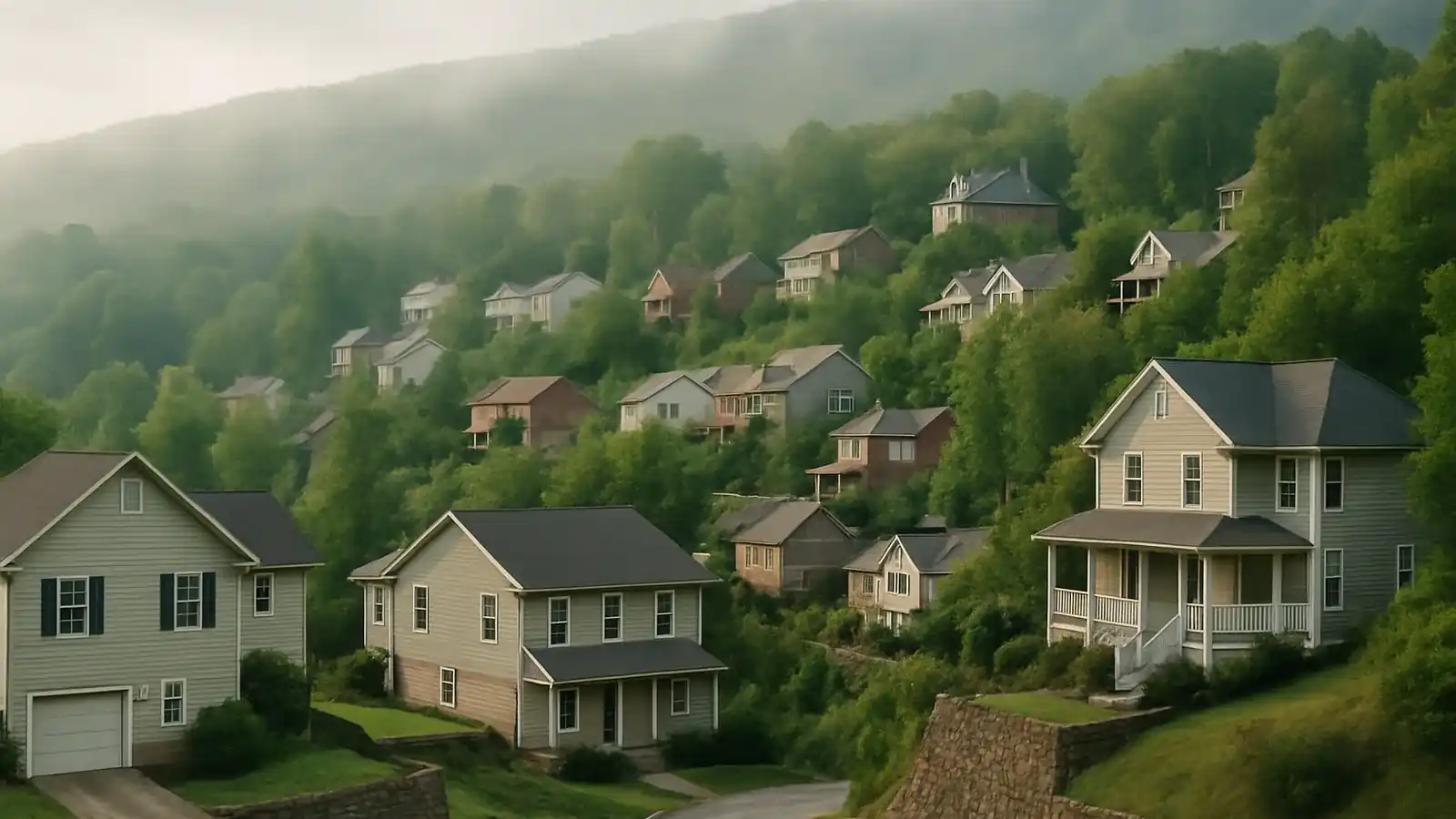
Foundation repair in Chattanooga costs $4,000–$15,000 for most full structural repairs, $1,200–$3,000 per pier, $1,500–$8,000 for slope drainage, $2,500–$10,000 for wall restraint, and $400–$1,500 for crack repair. Simple grading and downspout corrections often start under $500.
Further down: what each range pays for, what raises or lowers a quote on a hillside lot, and the questions that tell a fair bid from an expensive one.
Chattanooga foundation repair prices by fix
| Repair | Typical range | What it covers |
|---|---|---|
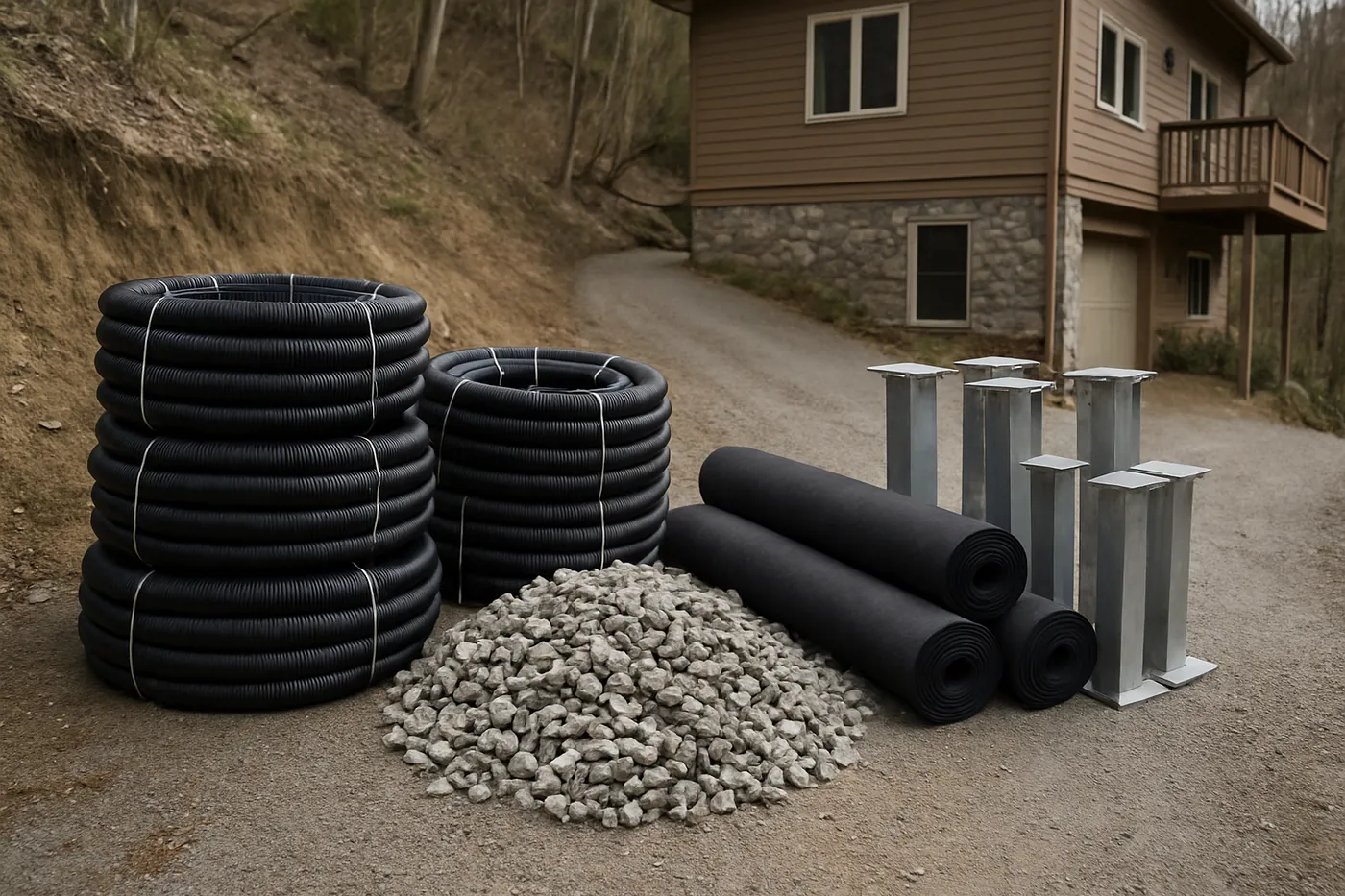
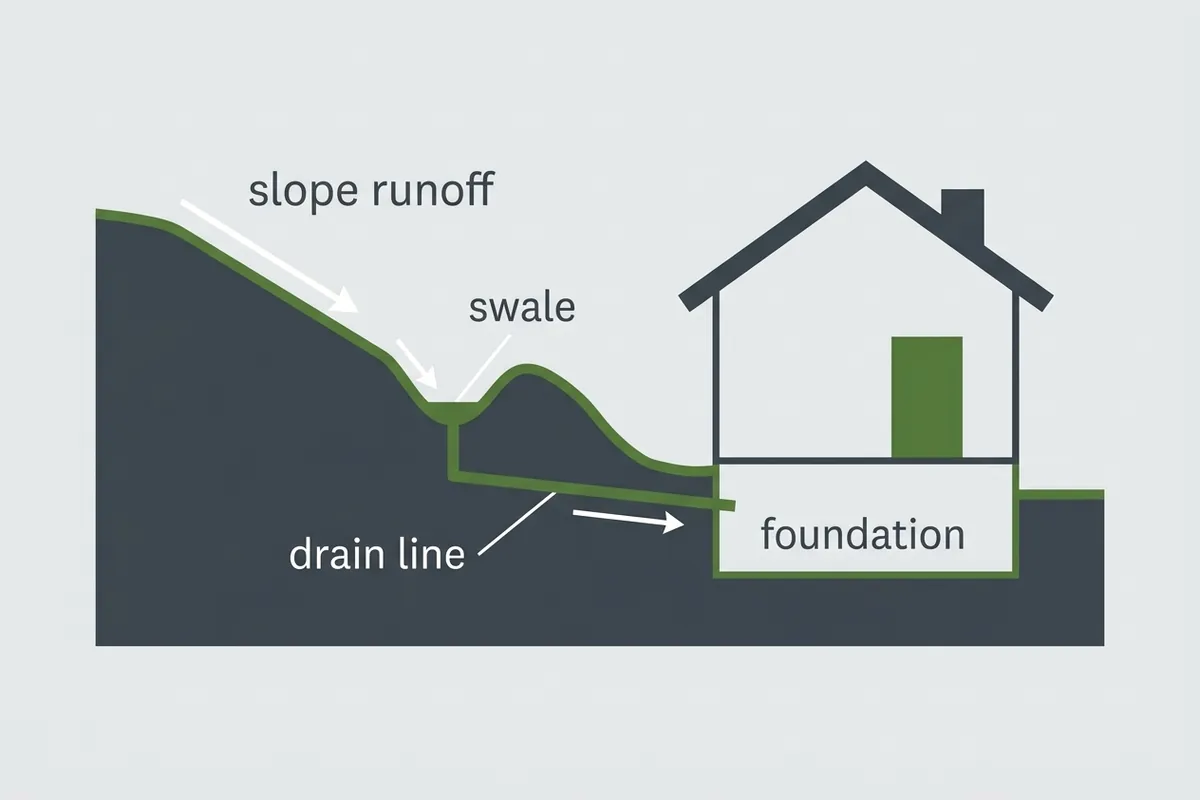
| Slope drainage correction | Under $500–$8,000 | Downspout extensions and regrading at the low end; uphill swales and bedded interception lines with a walked discharge at the high end |
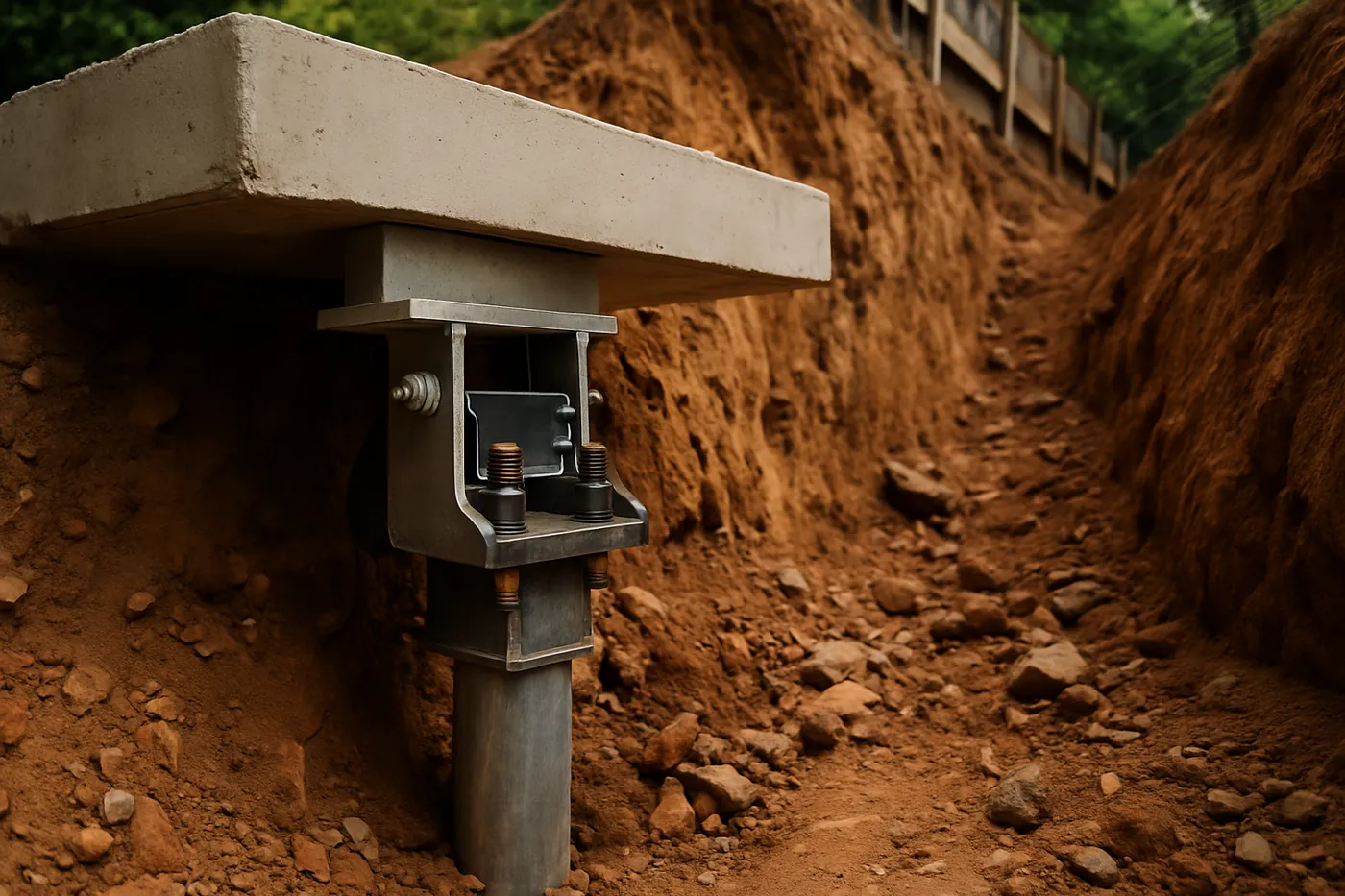
| Piering / underpinning | $4,000–$15,000+ | Three to eight steel piers driven to refusal on limestone or stable bearing, bracketed to the footing, refusal pressure logged individually |
| Bowing wall repair | $2,500–$10,000 | Carbon fiber under about an inch of deflection; steel braces or wall anchors beyond it |
| Retaining wall repair | $1,500–$12,000 | Drainage retrofit, anchors and tiebacks, partial or full rebuild with gravel backfill and a discharge path |
| Crack repair | $400–$1,500 | Polyurethane or epoxy injection, carbon staples, masonry repointing |
Figures reviewed July 2026. Sources you can check: Each soil, geology and climate point on this page can be checked against a public source: the USDA Web Soil Survey for soil series across Hamilton County, the Tennessee Division of Geology for Ridge-and-Valley geology and karst maps, and NOAA U.S. Climate Normals for rainfall in Chattanooga. The repair ranges are typical local figures, broken down on the cost guide.
The four factors that move a Chattanooga quote
1. How much water the lot delivers. This is the first question on a hillside, and it's the one most estimates skip. A house receiving concentrated runoff from acres above it has a different problem, and a different price, than the same house on level ground. The walk uphill is what establishes it.
2. Depth to refusal. The largest source of legitimate variation between honest bids. Residual soil over limestone and shale means depth to rock varies sharply across a single lot, so two piers twenty feet apart can differ genuinely. Sections are priced individually, which makes an assumed depth an expensive guess.
3. How much of the footing moved. The price follows the stretch of foundation that a laser floor survey shows has moved, not the size of the house. A big house that settled in one wing can need fewer piers than a small one that dropped along a whole side.
4. Access on a slope. Steep lots, retaining walls in the way, tight hillside side yards, and limited equipment routes add real hours, and sometimes rule out a method entirely (wall anchors need yard room beyond the wall, which an uphill cut lot may not have). These are constraints, not mysteries, and they belong itemized in a scope.
Comparing bids like an inspector
- Ask whether anyone walked uphill of the house. On this terrain a bid that never left the foundation is diagnosing a symptom.
- Ask whether pier depths were measured or assumed, and ask to see the refusal pressure log at completion.
- Ask for the deflection measurement behind any wall restraint recommendation.
- Check whether drainage is included or excluded. Here, a structural bid that ignores water is an incomplete bid.
- Ask where the discharge terminates. On a slope, water routed to the wrong place becomes someone's problem, often yours again.
- Be skeptical of a karst pitch. Karst is real in these valleys and rarely the explanation for an ordinary crack. Anyone leading with sinkholes before ruling out drainage is selling, not diagnosing.
When the honest answer is "spend a few hundred dollars"
Plenty of Chattanooga evaluations end with no structural recommendation at all. A swale above the house, four longer downspouts, a regraded uphill side, and a driveway edge that no longer channels water at the garage wall solve a real share of problems here, because on slopes this steep and with rain this heavy, redirecting water is often the whole fix. Those visits should end with a written scope at that price and nothing added, because a company that never turns down the bigger job is not really measuring.
Cost questions, straight answers
What's the average foundation repair cost in Chattanooga?
No average is worth giving; the spread is the honest answer. Crack injections begin around $400; drainage correction runs $1,500 to $8,000, with simple fixes below $500; wall restraint $2,500 to $10,000; retaining wall work $1,500 to $12,000; and full piering $4,000 to $15,000. Your number comes down to how much water the lot sends at the house and how much of the footing has moved.
Why is the drainage line often bigger than the structural one?
Because on this terrain water is usually the cause rather than a contributing factor. Roughly 55 inches of rain a year landing on real slope means a hillside foundation can be receiving runoff from far more ground than its own. A scope that prices interception above the house as the main line is reading the lot correctly, not padding.
Why do two Chattanooga bids differ by thousands?
Usually because they cover different work, or because one measured pier depth and the other guessed it. On Ridge-and-Valley ground the depth to rock can change sharply within one lot, and each pier section is priced separately. Compare how many piers each bid includes and whether depths were measured, whether drainage is in it, and whether the warranty transfers.
Is financing normal for this kind of work?
That happens often, and phasing the work is worth asking about. The usual order here makes phasing easy: outside water fixes first (often a few hundred dollars, and they remove the cause), then drainage, then the structural work. What should not wait is a wall bowed more than two inches or a retaining wall tipping at its base.
Does foundation repair pay off at resale?
Here it protects value more than it adds to it. Buyers' inspectors in this area know hillside lots and look hard at the uphill side, the crawl space and any retaining wall. A water problem left alone invites a price renegotiation that often costs more than the repair would have, while a documented repair with a transferable warranty closes the issue.
Is there a charge for the evaluation?
It depends on the company. Many local specialists don't charge for the first visit; ask when they call, before they come out. Ask for photos, crack measurements, laser floor elevations, wall plumb readings, a walk of the water path above the house and a written, itemized scope, even when the honest answer turns out to be a swale and four downspout extensions.
Get a Chattanooga foundation evaluation
Tell us what the house is doing (stair-step cracks, a wall pushed in on the uphill side, water crossing the lot, sloping floors) and we'll pass it to one independent local specialist for an evaluation. You get a call back from a local specialist who serves Chattanooga.