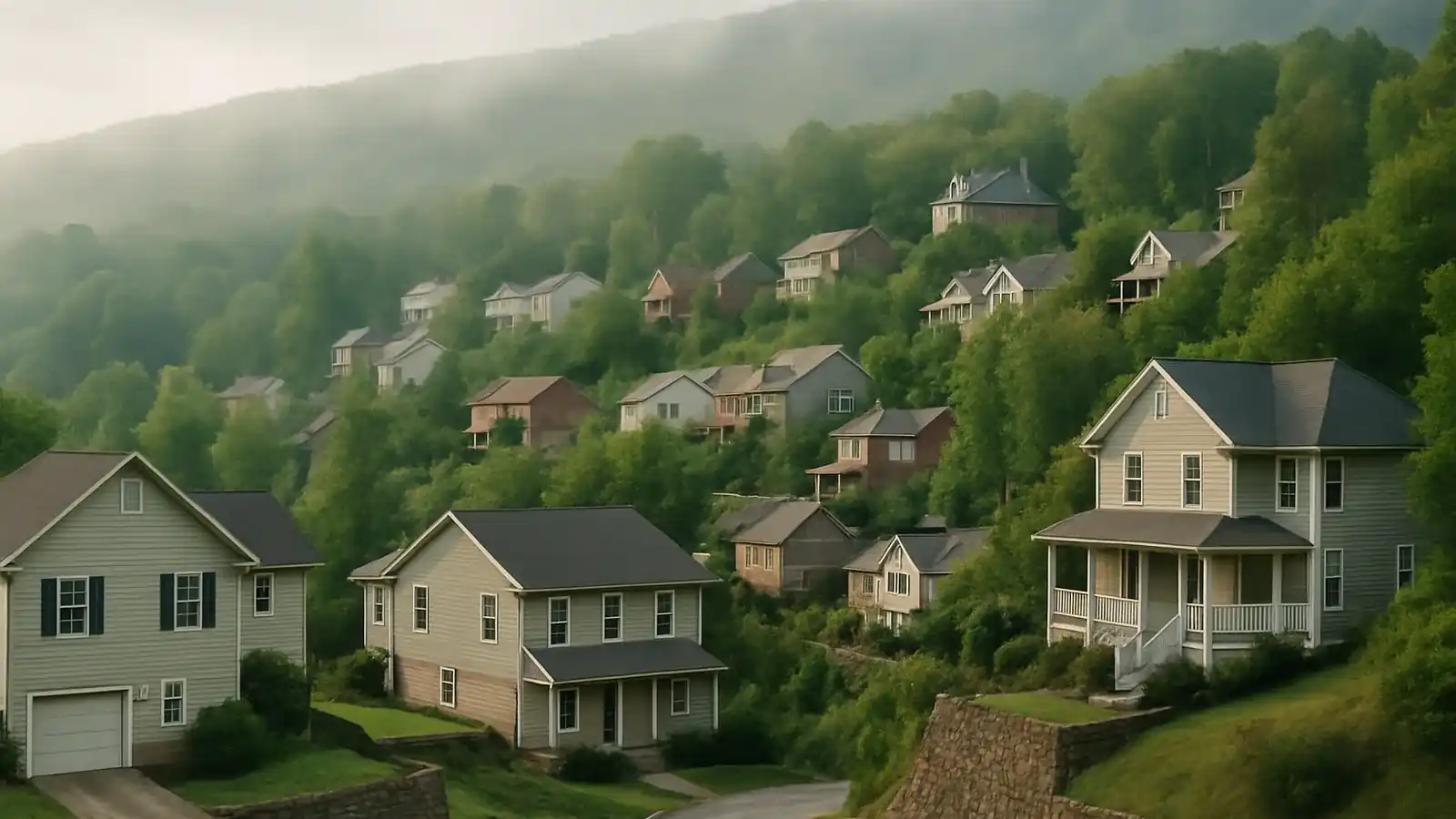
Chattanooga Foundation Co. connects you with a local specialist for the full failure chain hillside water causes: slope runoff (drainage from under $500), settlement (piers from $1,200 each), uphill wall movement (from $2,500), cracks (from $400), and failing retaining walls (from $1,500). Each preceded by a measured evaluation.
Foundation Piering & Underpinning
Steel piers to rock or stable bearing where residual soil over bedrock let a footing down.
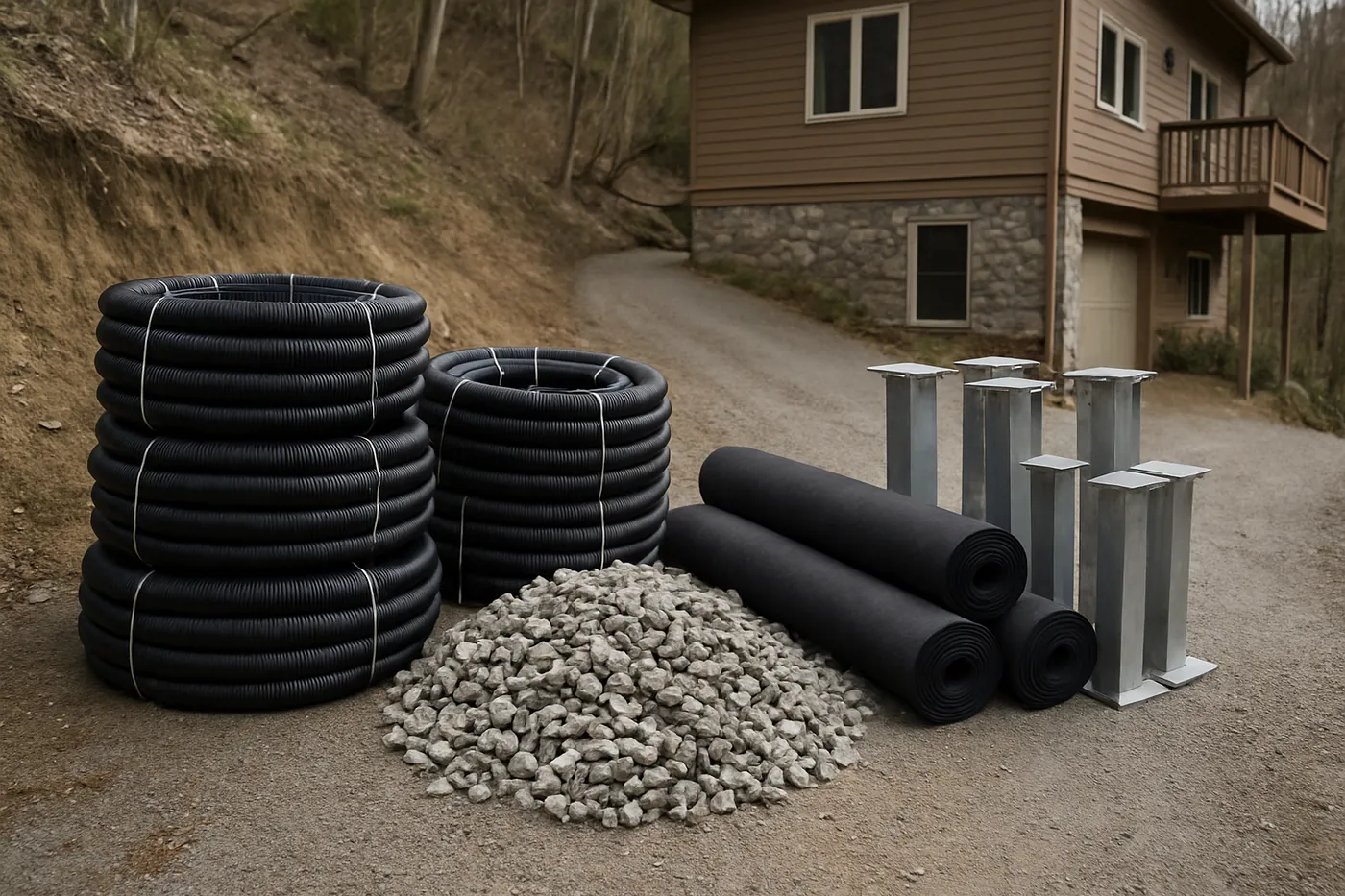
Slope Drainage Correction
Intercepting hillside runoff above the house: the cheapest structural work in this market.
Bowing Wall Repair
Carbon fiber, braces, and anchors for uphill walls carrying slope and water pressure.
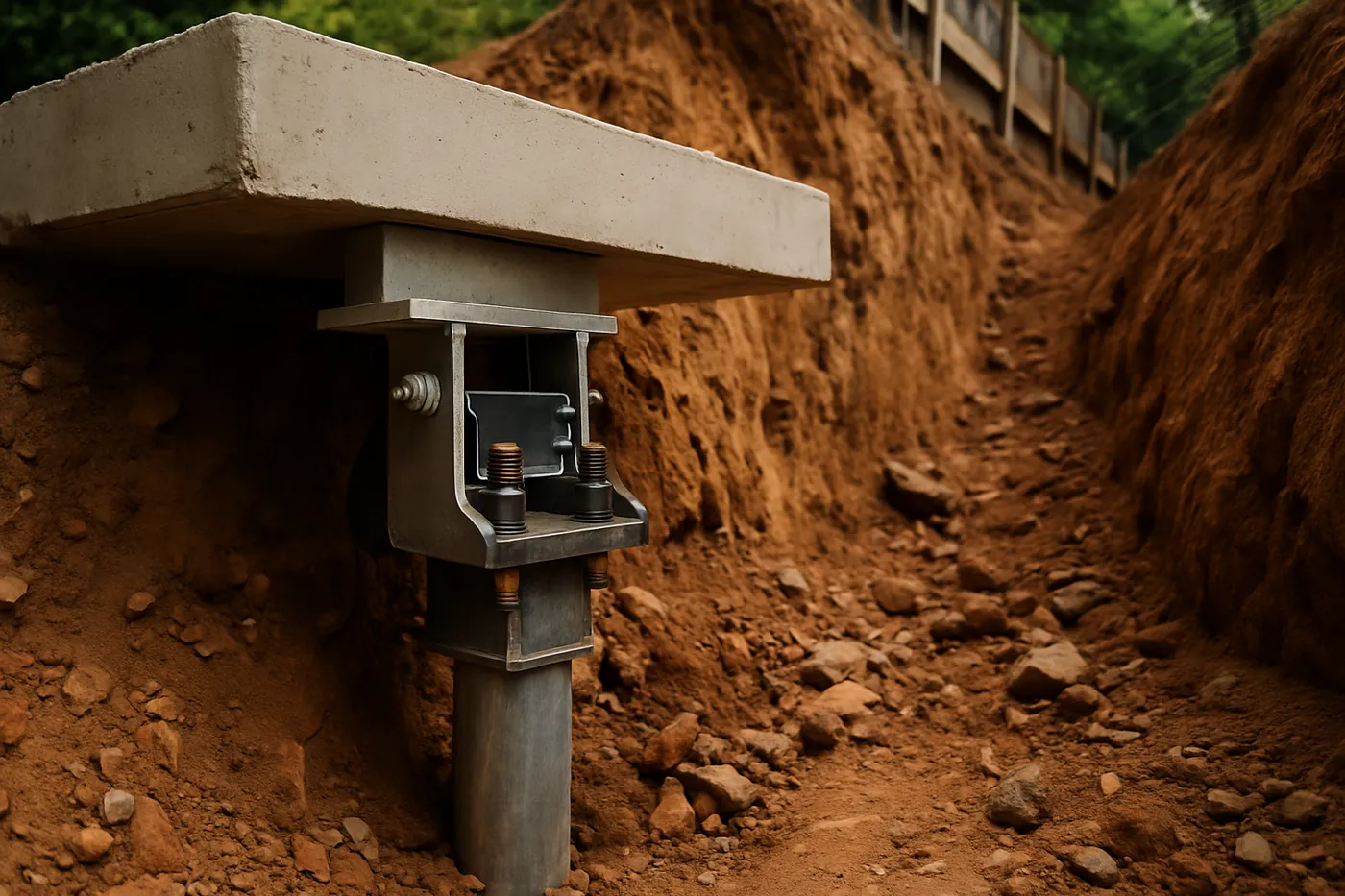
Foundation Crack Repair
Injection, sealing, and reinforcement for cracks that leak, widen, or both.
Retaining Wall Repair
Drainage, anchors, and rebuilds for the walls holding your hillside in place.
Foundation Settlement Repair
On slopes, settlement and slide wear the same clothes: measured diagnosis first.
Helical Piers vs Push Piers
Hillside cuts, valley karst, and two proofs of bearing: matched to the house.
Crawl Space Waterproofing
Hillside crawl spaces catch the hill’s water: drainage, barriers, and dry wood.
Exterior vs Interior Waterproofing
The uphill wall takes the hill’s runoff, where the system belongs on a slope.
Insurance & Foundation Repair
Tennessee’s exclusions, the sinkhole election, and the slope-water causation fight.
Structural Engineer or Contractor?
Hillside cuts and karst valleys give the stamp real work, and the survey answers the rest.
Cost Guide: What Repairs Run in Chattanooga
Every repair class priced for this market, the four factors that move a quote, and how to compare bids.
Why the services come as a set
Water running down a slope ignores product lines. The same runoff that soaks the backfill behind your uphill wall also carries soil out from under the footing, finds every crack in the foundation, and overloads the retaining wall that holds up your driveway. A company built around one product sells that product. A good specialist starts from the water instead, so the evaluation follows the whole chain and the scope covers only the parts your house needs.
Which repair fixes which failure
| What you see | The mechanism | The fix | Typical range | Time |
|---|---|---|---|---|
| Water crossing the lot, wet crawl, soggy uphill side | Slope runoff concentrating at the foundation | Interception above the house | Under $500–$8,000 | 1–2 days |
| Stair-step cracks, dropped corners, sloping floors | Footing settling where soil over rock is deeper or washed | Piers to refusal | $4,000–$15,000 | 2 days–1 week |
| Uphill wall cracked horizontally or pushed inward | Saturated hillside soil loading a cut-slope wall | Carbon fiber, braces, or anchors | $2,500–$10,000 | 1–3 days |
| Cracks leaking, or reacting to heavy rain | Water finding a path through the foundation | Injection and reinforcement | $400–$1,500 | Hours |
| Retaining wall leaning, bulging, or shedding block | Saturated backfill with nowhere to drain | Drainage, anchors, or rebuild | $1,500–$12,000 | 1 day–1 week |
Two or more symptoms nearly always share one cause. One evaluation, one scope, one mobilization. That's the cost control this terrain allows.
Sequence is the service, and here it starts uphill
Bolting a brace to a wall takes no special skill. What matters on Chattanooga hillsides is putting the work in an order that lasts: first catch the water above the house, since that is the cheapest line and it removes the cause; then fix grading and paving that funnel runoff; then add restraint or piers, which now face a much smaller load; and leave cosmetic repair for last, once the movement has clearly stopped. Ask for the scope in that order with a price on each line, and for anything the measurements do not support to stay off it.
Service questions
Which service does my house actually need?
The evaluation answers that in about an hour, and on a hillside it starts uphill. Water crossing the lot points to drainage; stair-step cracks with sloping floors point to piering; a cracked or pushed-in uphill wall points to restraint; a leaning wall near the house points to retaining work. Most hillside houses need two of these, not five.
Is there a charge for evaluations?
It depends on the company. Many local specialists don't charge for the first visit; ask when they call, before they come out. Ask for photos, crack measurements, laser floor elevations, wall plumb readings and a walk of the water path above the house, including on visits that end with 'dig a swale and extend the downspouts' and no bill.
Can one crew handle the water and the structure together?
That is why the pieces are scoped together, and on these slopes it decides whether a repair lasts. Drainage, piers, wall restraint, crack work and retaining walls are one hillside water problem showing up five different ways. Scoping them together and in the right order keeps you from putting steel into a problem that is still active.
Get a Chattanooga foundation evaluation
Tell us what the house is doing (stair-step cracks, a wall pushed in on the uphill side, water crossing the lot, sloping floors) and we'll pass it to one independent local specialist for an evaluation. You get a call back from a local specialist who serves Chattanooga.