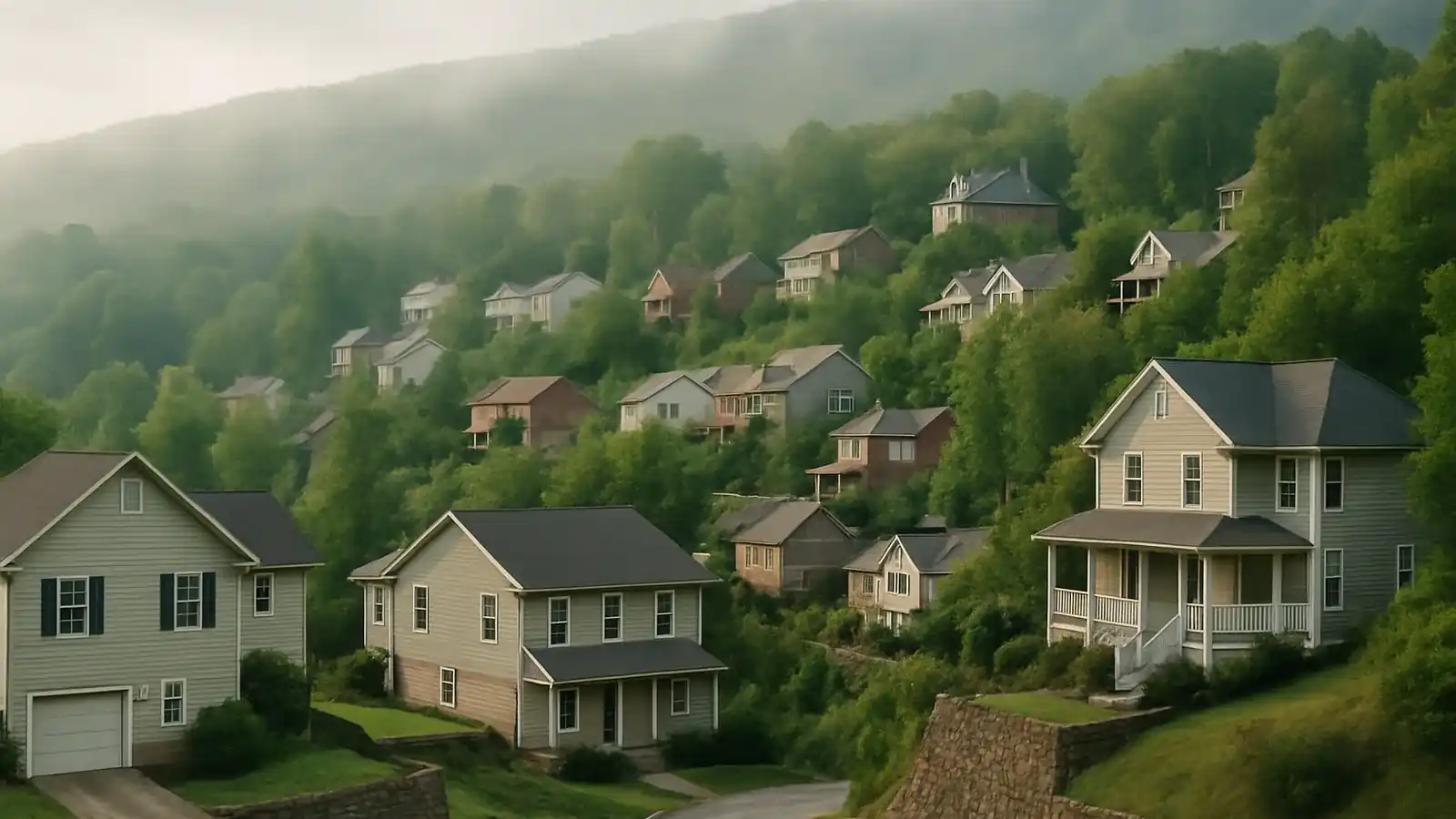
Chattanooga Foundation Co. takes foundation repair requests across Hamilton County, north Georgia, and the plateau, where one problem dominates: slope water arriving at foundations built into Ridge-and-Valley terrain. We pass each request to one independent local specialist. A good evaluation includes a walk uphill of the house.
How a good scope is built
The order should always be measurements, then a recommendation, then a price. A laser floor survey shows which stretch of the foundation actually moved, so the number of piers matches the house instead of a package. A plumb line shows how far a wall has bowed, which decides how it is restrained. And a walk up the hill shows the cause, the step most estimates leave out. If the readings fall within tolerance, an honest report tells you to mark it, date it and keep watching.
Water first, and on a slope that means above the house
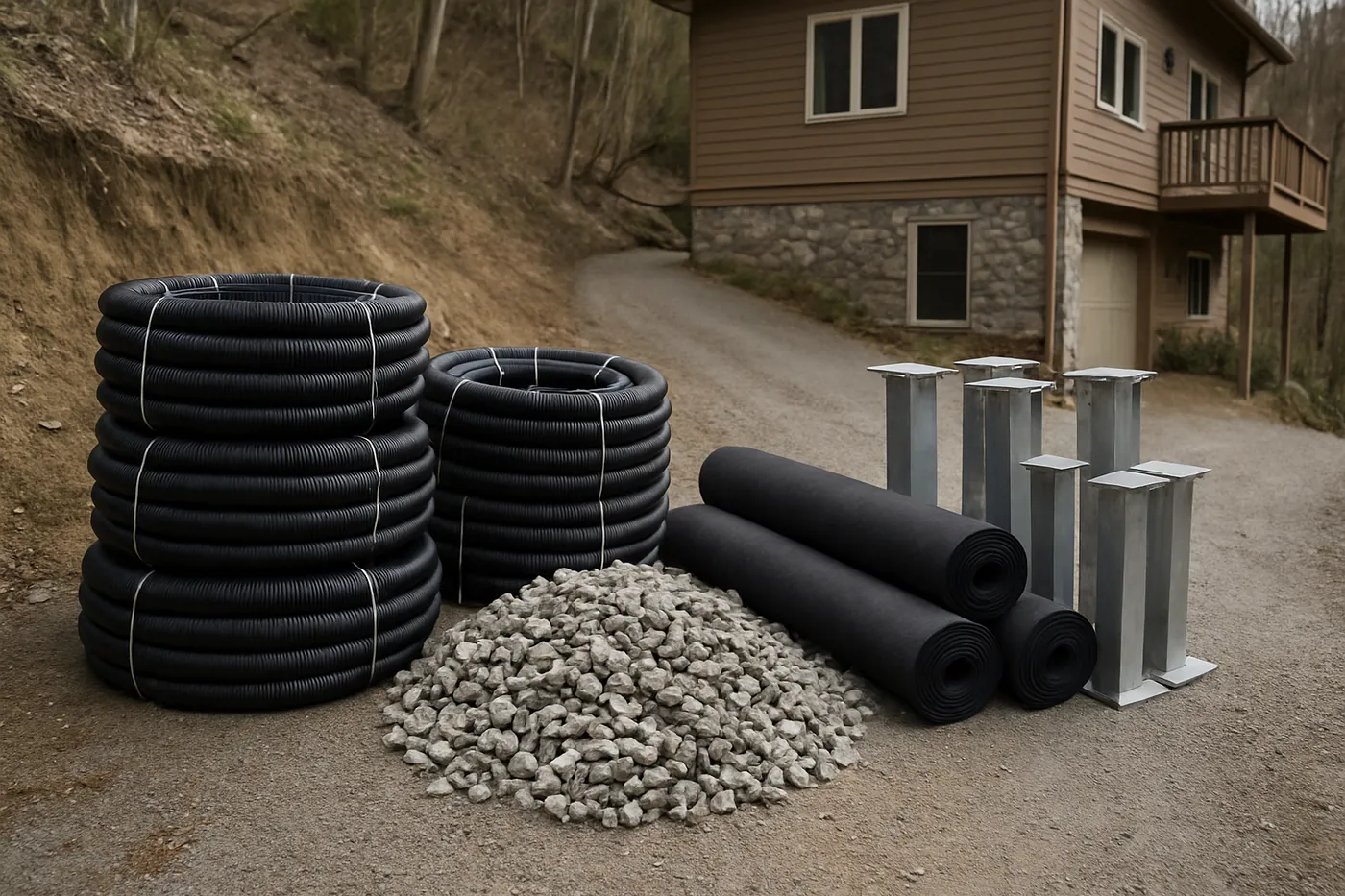
On this terrain the sequence is the expertise. Intercepting runoff above the house comes first, because it's the cheapest line and it removes the cause rather than resisting it. Grading and hardscape corrections come next. Structural restraint and piering come third, now working against a much smaller load. Skip to step three and you've bought good steel and kept the mechanism, which is why a good scope leads with the cheapest lines rather than the largest.
What to know about karst
The limestone valleys here carry documented karst features, and some companies use that word as a sales lever. The honest position: karst means groundwater can move where surface grading doesn't predict, which is worth knowing when a wet spot has no visible source. It very rarely means a house sits above a void. A good specialist diagnoses slope water, drainage, and differential soil depth first because that's what the evidence shows on the overwhelming majority of lots, and where a pattern genuinely doesn't fit, the right answer is a geotechnical referral, not a bigger pier package.
The foundation repair work covered here
Five kinds of repair cover almost everything these hillsides cause: slope drainage correction to catch water above the house, steel piers where a footing has sunk, carbon fiber, braces, and anchors for uphill walls under pressure, injection and reinforcement for cracks that leak or grow, and retaining wall repair for the walls that keep your hillside where it is. The cost guide shows what each range pays for.
What good field work looks like
Ask for pictures of each stage, a record of the refusal pressure at every pier, and the papers a future buyer's inspector will ask for. The house usually stays livable during the work. On a steep lot especially, ask for the access route, where equipment will sit, where digging will happen and how the yard will be restored to be written into the scope before work begins, so day one brings no surprises.
Get a Chattanooga foundation evaluation
Tell us what the house is doing (stair-step cracks, a wall pushed in on the uphill side, water crossing the lot, sloping floors) and we'll pass it to one independent local specialist for an evaluation. You get a call back from a local specialist who serves Chattanooga.