
Most Ringgold foundation work lands between $1,500 and $15,000, set by how much water the lot delivers, how much of the footing moved, and how deep piers must go to reach rock. Residual soil over limestone varies sharply across a single lot. The evaluation is free.
Built at a gap, which is where water goes
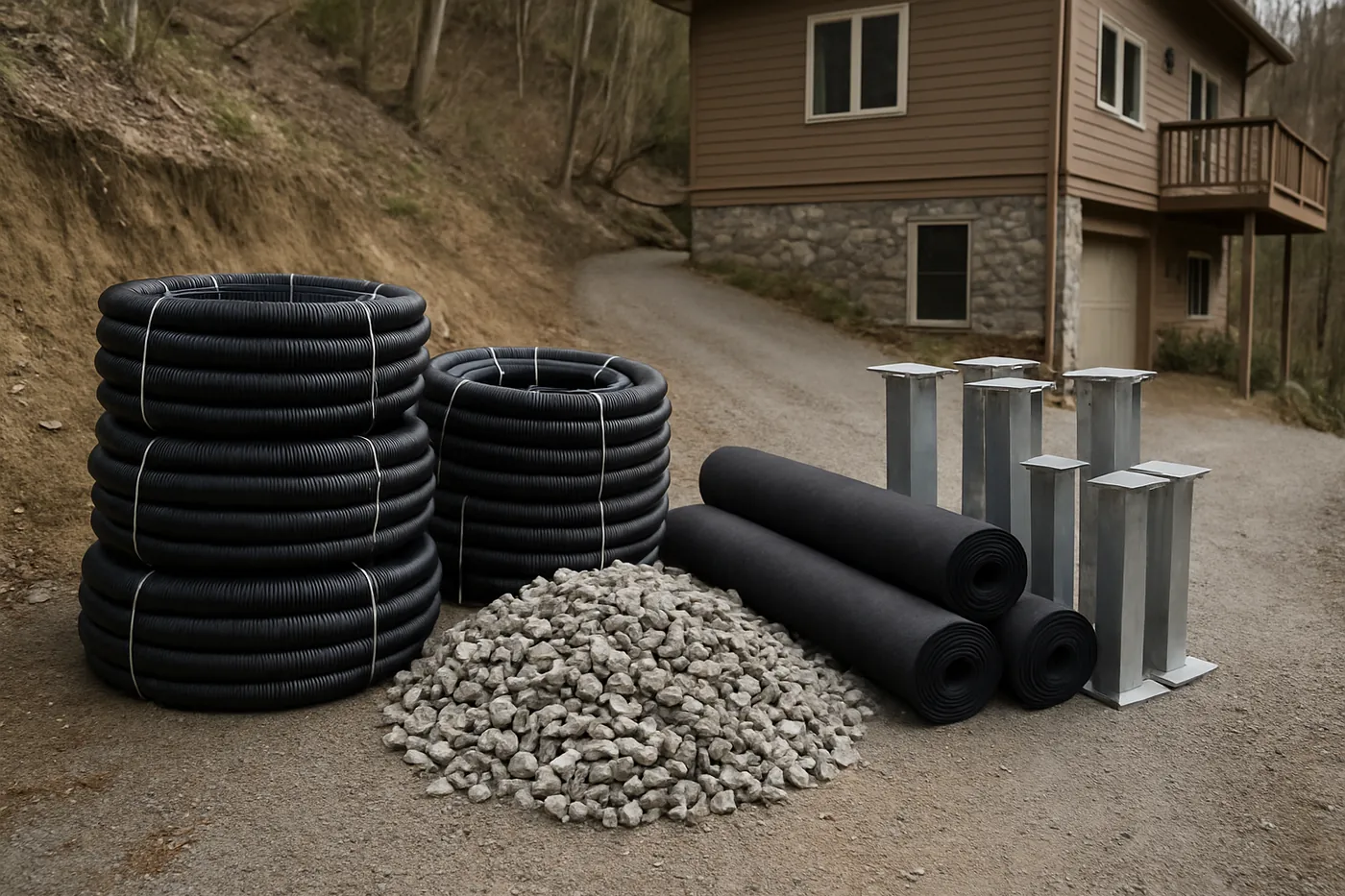
Ringgold sits at the gap through Taylor's Ridge, and a gap in a ridge is not a neutral location. It's the low point that terrain on both sides drains toward, the route roads and rail took for the same reason, and the place where runoff naturally concentrates. Houses here frequently deal with more water than their own lots produce.
That geography drives the local repair mix. Slope interception above the house, corrected grading, and routing that accounts for water arriving from outside the property do more here than anything applied at a foundation wall. Where a house sits low relative to the ground around it, the evaluation starts by mapping where water enters and leaves the property before anyone discusses a pier.
A town that has rebuilt
Ringgold was struck by a major tornado in 2011, and substantial rebuilding followed. That gives the community an unusual housing profile — original older construction alongside homes built within the last fifteen years, sometimes on the same block. Newer construction here brings the standard questions about backfill around a new foundation and whether the lot was cut or filled; older construction brings the usual questions about mortar, footing depth, and crawl space moisture.
Georgia rules, Tennessee geology
The soil profile is Ridge-and-Valley — residual clay over limestone and shale, with variable depth to rock — identical to what we work in across the line. The permitting and inspection requirements are Catoosa County's. We work under whichever set applies and say so in the scope, particularly on retaining walls, where height thresholds and engineered-design rules differ between jurisdictions.
Asked in Ringgold
Why does our lot get so much water?
Because of where the town sits. Ringgold is at the gap through Taylor's Ridge, and a gap is the low point terrain on both sides drains toward. Houses here frequently handle more water than their own lots produce, which is why the evaluation maps where runoff enters and leaves the property first.
Our house was rebuilt after the tornado. Different considerations?
Somewhat. Newer construction brings the questions that follow any new foundation — loose backfill collecting surface water and delivering it to the footing, and whether the pad was cut or filled. Those are ordinary and usually correctable with drainage rather than structural work.
Do you serve Catoosa County?
We serve Catoosa County, Ringgold and the surrounding Catoosa County communities are on our regular southern route. Evaluations schedule on the same timeline as everywhere else we serve, and travel across the state line is stated openly in the scope.
What's the most common finding on a Ringgold evaluation?
Water routing, more often than structural failure. Where the terrain concentrates runoff toward a house, correcting the path above it is inexpensive and frequently reduces how much structural work — if any — the house ends up needing.
What happens after you call
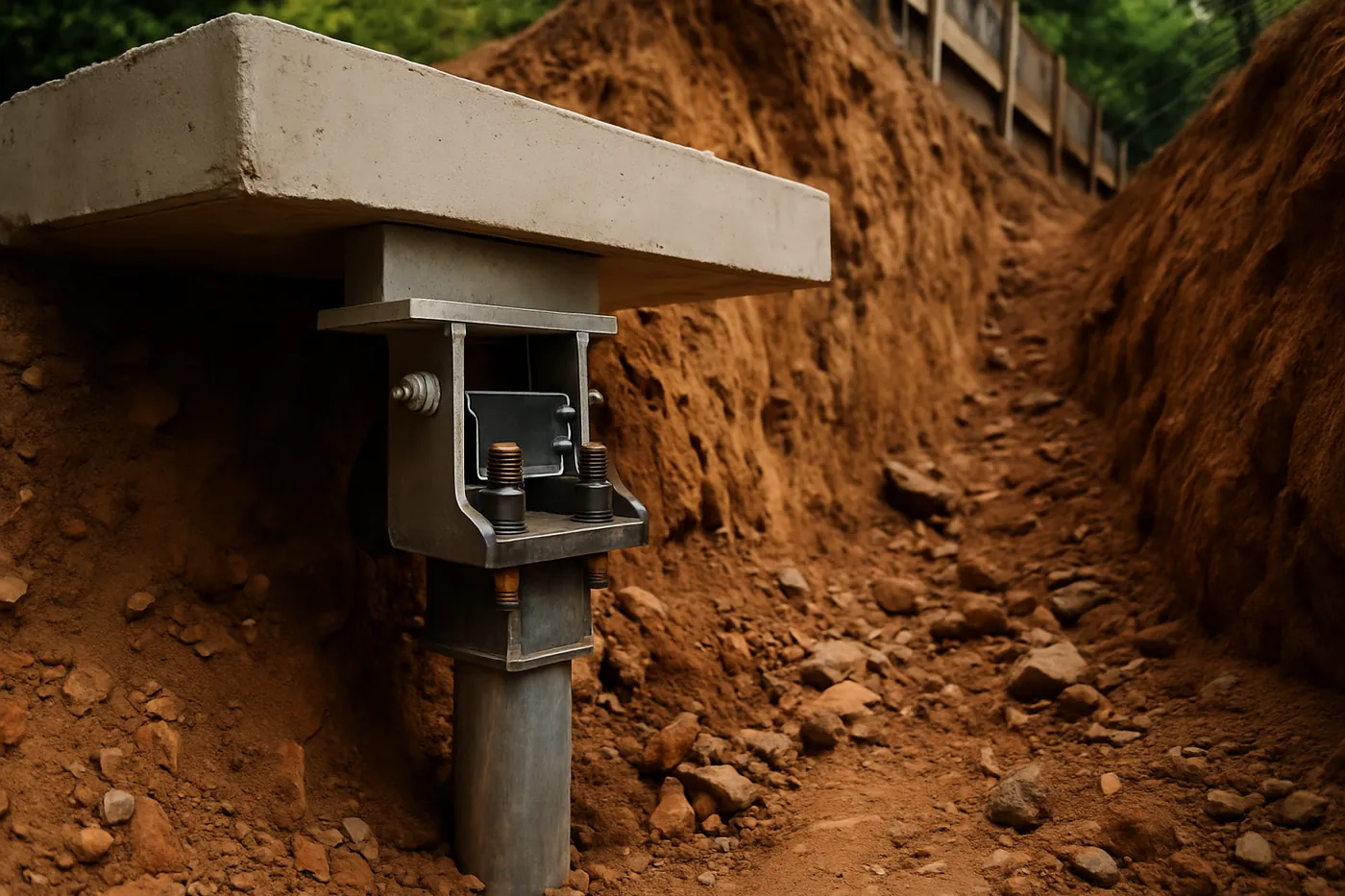
We measure Ringgold houses before pricing them: floor elevations, crack widths, wall plumb, and a walk uphill of the house for the water story. You get a written scope with fixed line prices — and an honest "watch it" when that's what the numbers say. See the cost guide or the full service list.
Get a free Chattanooga foundation evaluation
Tell us what the house is doing — stair-step cracks, a wall pushed in on the uphill side, water crossing the lot, sloping floors — and we’ll schedule an evaluation with photos, measurements, and a walk of the slope. We reply the same business day.